

Under a NASA Phase I SBIR and Phase II SBIR, Advanced Space has been developing mission architectures and requirements for customizing low-cost rocket transfer stages that will deliver small spacecraft to nontraditional orbits. Phase I concerned providing position, navigation, and timing (PNT) and communications relay services for small spacecraft deployed in cislunar and interplanetary space.
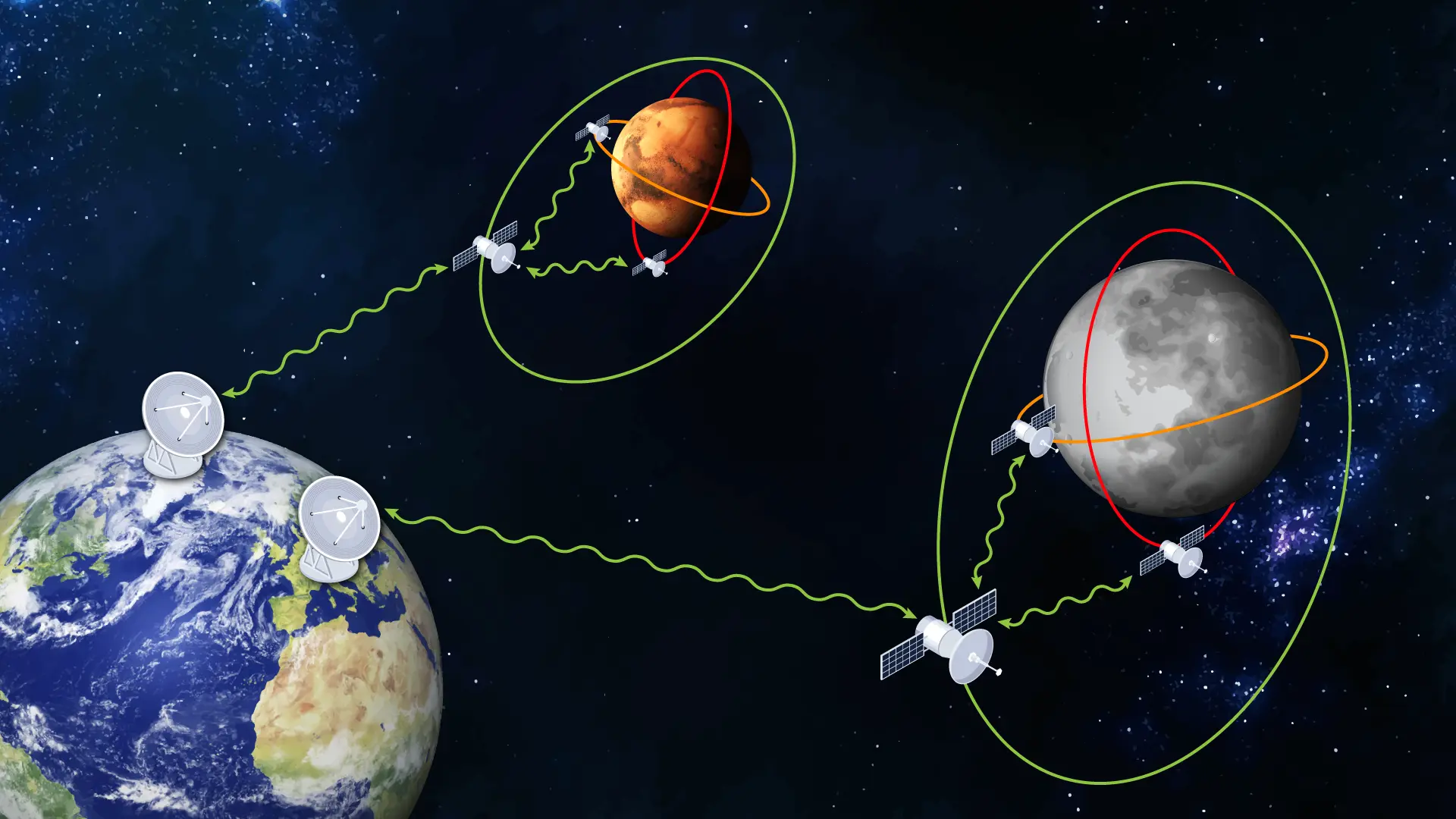
Phase II is focusing on providing communications and PNT services for the Moon and Mars. The proposed solution defines a set of modular mission architectures and ConOps that match launch vehicle and transfer stage capabilities to deploy a primary payload in its destination orbit.
Phase I
In the Phase I study, Advanced Space quantified the performance of Firefly Aerospace’s Elytra stage to service cislunar orbit regimes and destinations including Venus, Mars, and NEOs. We also provided mission architectures and DRMs to derive requirements that further matured Elytra’s design so that it could service an expanded set of mission destinations as a PNT and communications platform for the payloads it delivers. The proposed solution in Phase I resulted in a mission-planning system that defines the required capabilities of the transfer stage to satisfy any given design reference mission (DRM).
Phase II
Phase II will identify the mission architectures and hardware modifications needed to enable Elytra to provide high-bandwidth communications for lunar and Martian communications. The team also will investigate use of the Advanced Space Cislunar Autonomous Positioning System (CAPS) as a means of providing PNT services in cislunar and Martian space.